
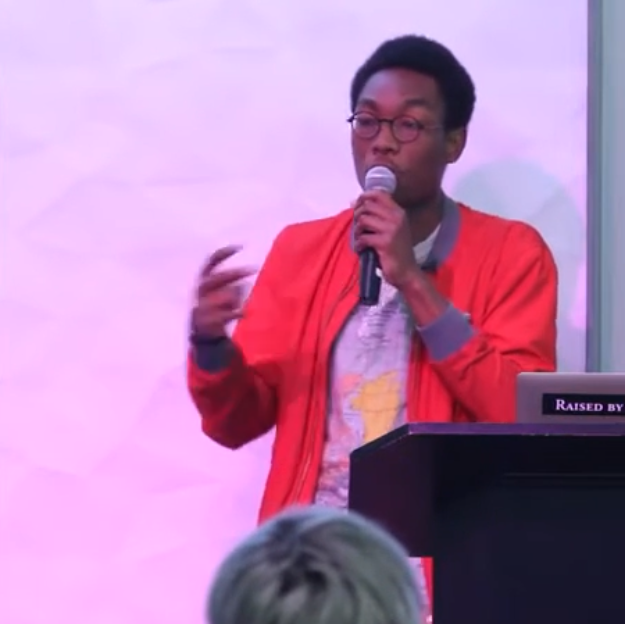
Speaker: Laolu “Roasbeef” Osuntokun
[00:00:26] Introduction The talk focuses on the technical underpinnings of the Lightning Network, specifically moving beyond high-level concepts to explain the actual commitment protocols, the architecture of the Lightning Network Daemon (LND), and future routing strategies like Flare.
[00:01:27] The Core: Bi-directional Payment Channels A channel is essentially a 2-of-2 multi-signature escrow on the Bitcoin blockchain. Two parties deposit funds into this “funding transaction.” Once this is confirmed, they can perform an unlimited number of off-chain transactions by updating the balance distribution of those funds without touching the main blockchain.
[00:01:51] The Necessity of SegWit Laolu explains that for Lightning to be safe, a “malleability fix” like SegWit is required. Without it, if a party modifies the ID of a funding transaction before it is confirmed, the subsequent “commitment transactions” (the ones that let you get your money back) become invalid, potentially trapping funds forever.
[00:03:01] State Revocation and Trustlessness Because off-chain transactions are just “promises,” there must be a way to prevent someone from broadcasting an old state where they had more money. Lightning solves this using a revocation scheme. Every time a new state is created, the previous state is “revoked” by sharing a secret key. If a party tries to cheat by broadcasting an old state, the honest party can use that secret to instantly take all the funds in the channel as a penalty.
[00:04:42] Multi-hop Payments and HTLCs To send money to someone you don’t have a direct channel with, the network uses Hash Time-Locked Contracts (HTLCs). A payment is “locked” across a chain of participants. The recipient can only claim the money by revealing a secret (preimage). Once they reveal it to the person before them, that person can reveal it to the person before them, and so on, until the original sender’s payment is settled.
[00:13:33] The Lightning Commitment Protocol (LCP) Laolu details the LCP, which is the peer-to-peer language nodes use to talk to each other. It handles things like adding new HTLCs, removing them, and signing new states. It is designed to be asynchronous, meaning you don’t have to wait for one payment to finish before starting the next.
[00:14:14] Batching and Pipelining To achieve high speed, LND implements “pipelining.” Multiple payment updates can be sent into a channel simultaneously. The protocol allows nodes to batch these updates into a single cryptographic signature, which saves processing power and increases the number of transactions per second a single channel can handle.
[00:16:02] The Revocation Window Similar to how the TCP protocol handles internet data, Lightning uses a “window.” This limits how many unacknowledged state updates a peer can have “in flight” at once. This prevents one node from overwhelming another with too many updates to process.
[00:21:53] Building LND with Go The LND implementation is written in Go. Laolu chose this because of its excellent concurrency primitives (goroutines and channels), which are perfect for managing thousands of simultaneous payment requests. It also provides a clean way to handle complex networking tasks.
[00:25:24] LND Internal Architecture The daemon is divided into several modules:
- The RPC Server: Handles requests from users via gRPC or REST.
- The Wallet Controller: Manages the actual Bitcoin keys and on-chain transactions.
- The Chain Notifier: Watches the blockchain for specific events, like a channel closing.
- The HTLC Switch: Acts like a “router” inside the node, moving payments from one channel to another.
- The Breach Arbiter: A security module that watches for “cheating” attempts and automatically broadcasts penalty transactions.
[00:28:16] Live Performance Demo Laolu demonstrates a test between a node in New York and a node in San Francisco. He shows that the system can process thousands of micropayments almost instantly. By [00:35:45], he confirms that the current implementation can hit 1,000 transactions per second (TPS) on a single channel, which is significantly faster than the underlying Bitcoin blockchain.
[00:40:04] Network Gossip and Discovery To find a path to a recipient, nodes must know the “topology” of the network. Nodes broadcast “announcement signatures” to prove they have a real channel on the blockchain. This prevents “spam” nodes from flooding the network with fake routing information.
[00:42:31] Flare: Scaling to Millions of Nodes As the network grows, it becomes impossible for every phone to know the entire map of the network. Laolu explains “Flare,” a routing algorithm that combines “local” knowledge (who is near me) with “beacons” (well-known nodes further away). This allows a node to find a path across the global network without needing to store gigabytes of map data.
Post created via email from emin@nuri.com