
TL;DR
The Event: In December 2025, Gnosis Chain executed a controversial hard fork to recover $9.4M stolen in the Balancer protocol hack. The Conflict: The decision pitted “Pragmatists” (who prioritize victim restitution and mass adoption) against “Purists” (who fear the loss of credible neutrality and censorship resistance). The Outcome: The chain successfully seized the hacker’s funds, but the process bypassed the DAO vote, revealing that technical governance currently outweighs community governance in crises. A new “Intervention Framework” is being drafted to prevent arbitrary decisions in the future.
💥 The Context
In late 2025, the Balancer protocol suffered a global exploit. While the hack affected multiple chains, $9.4 Million was specifically stolen on Gnosis Chain.
Unlike Ethereum (which historically only forked for the massive DAO hack) or other L1s that might remain passive, Gnosis Chain validators took a two-step intervention:
- Soft Fork: Validators updated clients to “censor” the hacker’s address, freezing the funds.
- Hard Fork: A state change was executed to forcibly move the frozen funds to a DAO-controlled multisig for return to victims.
This decision sparked a fierce debate on the Gnosis Forum about the soul of the chain.
🏛️ The Great Debate: Pros & Cons
✅ The Case for Intervention (The Pragmatists)
- “Neofinance” Responsibility: Proponents argue that if Gnosis aims to be a layer for real-world assets and payments, it cannot allow theft to stand when a technical fix is available. Leaving $9.4M in a frozen wallet benefits no one.
- The “Sunk Cost” of Neutrality: The chain’s neutrality was technically breached the moment validators agreed to the Soft Fork (freezing the funds). Refusing the Hard Fork (returning them) would be performative rather than principled.
- Deterrence: Reversing the hack acts as a security feature. It signals to future attackers that Gnosis Chain is not a “soft target” where theft is profitable.
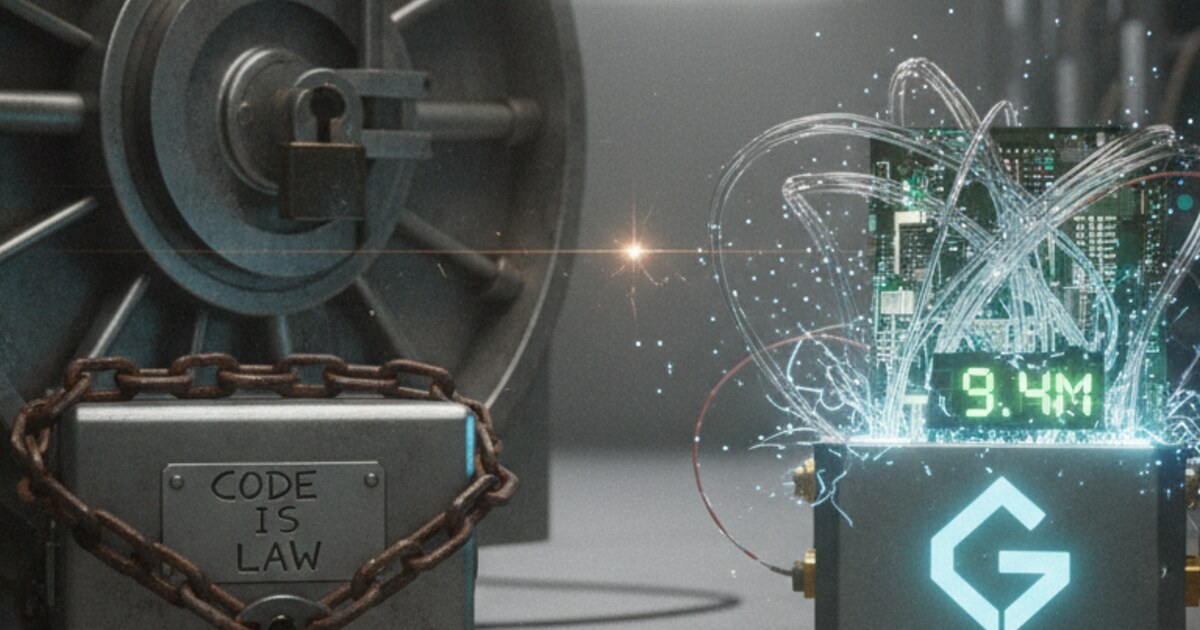
- Consensus Reality: The argument that “Code is Law” is superseded by “Consensus is Law.” If the majority of validators agree to run the patch, that is the legitimate state of the chain.
❌ The Case Against Intervention (The Purists)
- Erosion of Credible Neutrality: Critics warn that this sets a dangerous precedent. If validators can coordinate to seize a hacker’s funds, they can theoretically be compelled by governments to seize anyone’s funds.
- Moral Hazard: If protocols believe the Layer-1 will bail them out, they may under-invest in security audits. It shifts liability from app developers to network validators.
- Arbitrary Justice: The community highlighted inconsistency. In a previous incident (the sDAI-EURe pool leak), users lost funds due to a vulnerability but received no bailout. Why was the $9.4M Balancer hack “worthy” of a fork while smaller losses were not?
- Legal Liability: By intervening, validators move from neutral infrastructure providers to active decision-makers, potentially increasing their legal exposure.
⚙️ Power Dynamics: Who Actually Decided?
The incident revealed a “Technocracy” beneath the “Democracy.”
- The Gnosis Core Team: Held the most influence. They prepared the hard fork binaries and unilaterally decided to skip a formal DAO vote due to time constraints and the upcoming holidays. One core member admitted, “I simply forgot that I said [there would be a vote].”
- Client Developers: Teams managing validator software (like Lodestar and Nethermind) distributed “censoring images” to validators, sometimes through private channels. This “backroom” coordination bypassed standard open-source transparency.
- The DAO: Had negligible influence. The decision was executed by validators upgrading their nodes before a token-holder vote could take place. As one forum member noted, “DAOs have no vote on this… anything else is just theatre.”
🔮 What Happens Next?
The Hard Fork has been executed, and the funds are secured in a Gnosis DAO multisig. To repair the trust damage and address the “arbitrary justice” concerns, the community is now drafting a Crisis Intervention Framework.
Proposed “Bailout” Scoring System: Future interventions may require meeting strict thresholds, such as:
- Impact: Theft must exceed 1% of Chain TVL.
- Protocol Status: “Blue Chip” protocols (audited, long history) get priority over experimental code.
- User Base: Hacks affecting retail/mainstream users weighted higher than “degen” strategies.
🔗 References & Further Reading
- Original Discussion: Gnosis Forum: Balancer Hack Hard Fork Debate
- Balancer Incident Report: Balancer Security Updates
- Gnosis DAO Governance: Gnosis Snapshot & Forum
Post created via email from emin@nuri.com